
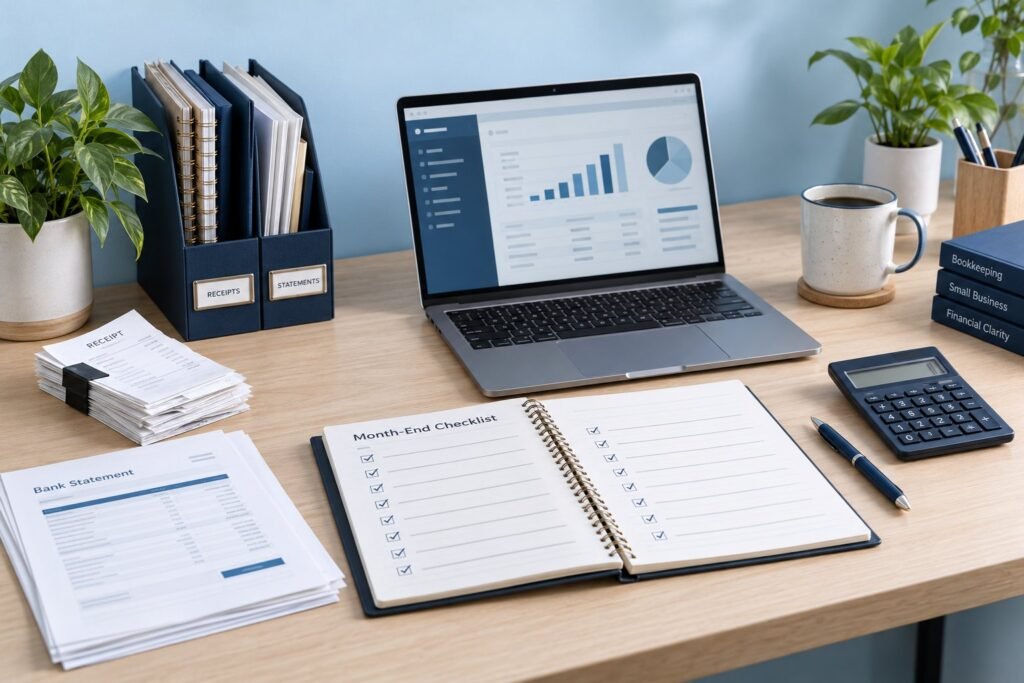
A bank statement tells you what reached the account. It does not necessarily show the sales detail needed to prepare a sales tax return. Fees, refunds and settlement timing can separate a deposit from the underlying transactions.
For a New York small business, the most useful starting point is an organized sales package. This guide focuses on preparing that package—not deciding a tax rate, filing frequency or whether a particular transaction is taxable.
Build the package around the reporting period
Label the period clearly and export reports using consistent date settings. Include each relevant sales channel, not only the main register. Keep the source files so an unexplained total can be traced to individual transactions.
Before sending documents, ask your accountant which reports and formats are appropriate for your systems. A spreadsheet with no headings may create more questions than it answers.
Preserve transaction detail
New York’s sales-tax recordkeeping guidance calls for records supporting sales, taxable status and tax collected, including supporting exemption and delivery information where relevant. Summary totals are not a substitute for the underlying evidence.
Keep invoices and receipts linked to the applicable records. Identify refunds and canceled transactions instead of silently replacing the original figures. If an exempt sale is claimed, flag the supporting documentation for review rather than assuming a customer’s description is sufficient.
Keep marketplace and direct sales distinguishable
If you sell through more than one channel, label the reports by source. Explain which platform handled which transactions and provide its tax reports when available. Avoid combining unlike reports before your accountant has determined how they fit together.
A useful handoff note might say: “The register report covers in-store sales; this second export covers website orders.” That explanation is more helpful than a single unlabeled sales total.
Give differences a place to be explained
Create a short questions list for refunds, missing invoices and totals that do not agree. Include purchase records your accountant requests when reviewing possible use-tax obligations. Do not change figures simply to force the sales report to equal the bank deposits.
Illustrative example: one batch of customer payments settles after the reporting period closes. Keep the settlement report and identify the dates so the difference can be assessed, rather than treating it as missing sales or adding it twice.
A practical file structure
Make one folder for the reporting period with separate sections for sales exports, refunds, supporting exemption documents, delivery details where relevant, and questions. Keep purchase records requested for the review in their own section. Use descriptive filenames so a corrected export is not mistaken for an additional sales channel.
Do not send your accountant only a screenshot of the dashboard. A readable export plus the underlying records makes it possible to investigate differences and ask targeted questions.
Agree on review and approval responsibilities
Clarify who supplies missing records, reviews the prepared figures, authorizes filing and arranges payment. Filing preparation, filing authorization and payment responsibility should not be left to assumption. Keep the resulting records together once the work is completed.
Sales tax support connected with your books
Go Tax Dude provides sales tax support as part of an agreed service scope and helps coordinate it with small business bookkeeping and accounting. Keeping the same underlying records available also supports business tax preparation.
Schedule a consultation to discuss your sales systems and filing support needs. We work from Port Washington with in-person appointments and remote document exchange through our secure portal.
General educational information, not individualized tax, accounting or legal advice. Treatment and requirements depend on the facts and applicable rules.